



Meta’s Andromeda Update: What It Is, Why It Matters, and How to Win in 2025
RUNWAY FIVE is the paid social growth partner for scale-ups.
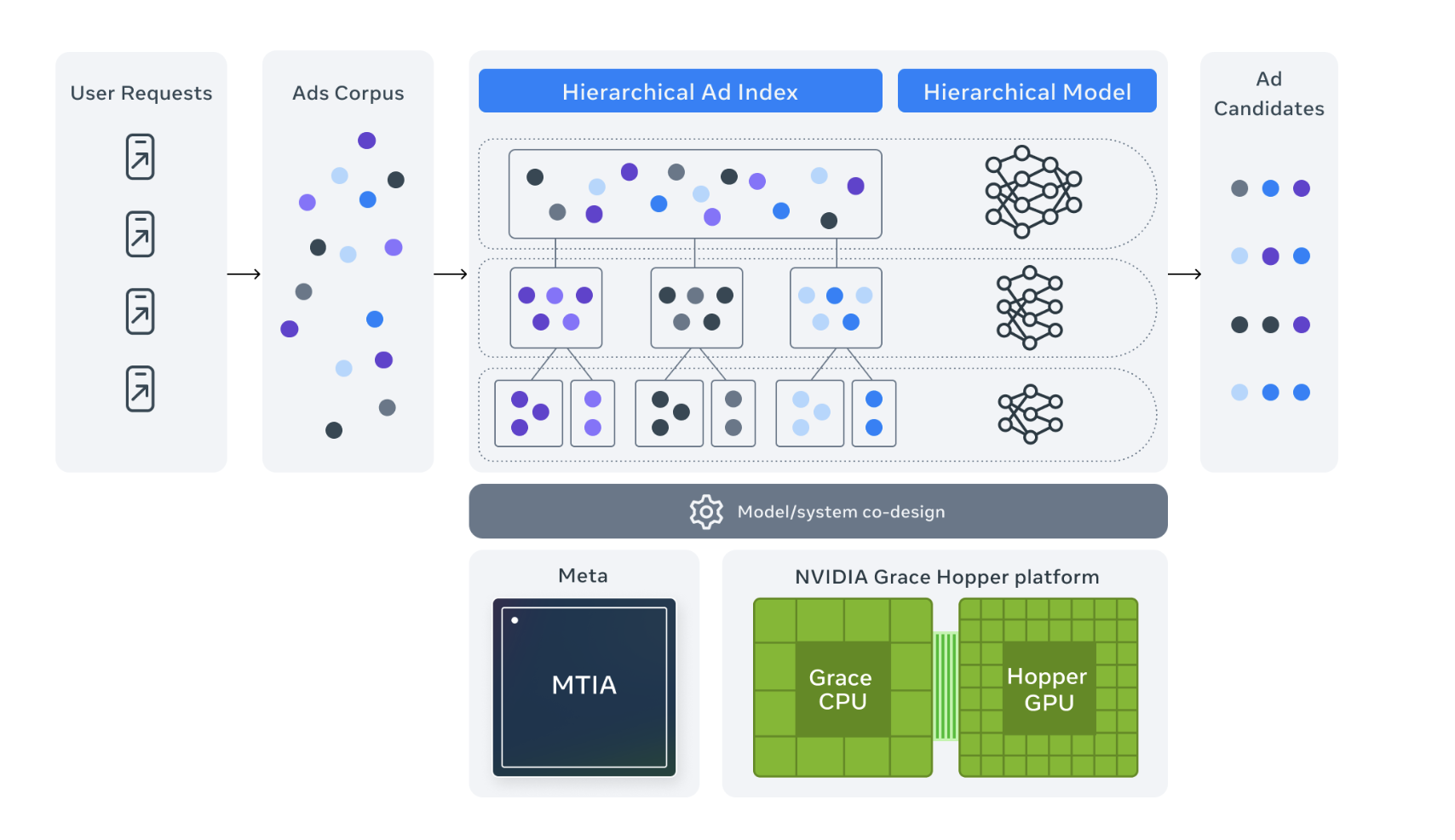
Meta Andromeda is Meta’s new personalised ads retrieval engine. It improves the step that builds a shortlist of ads for each impression, helping the system match people with the most relevant creative in real time. This means your creative variety and clarity are more important than ever, since Andromeda uses these signals to decide which ads to show.
What it changes
- The focus shifts from ‘who they are’ to ‘what they need now.’ Instead of relying on narrow audience segments, Andromeda now prioritises current intent and engagement. Your creative needs to highlight these signals.
- The approach moves from using narrow ad sets to building consolidated libraries. Having fewer ad sets with distinct creative concepts works better than fragmented structures with similar ads.
- The strategy changes from generic messages to stage-specific messages. Since retrieval responds to context, ads that match the right awareness stage are more likely to be shortlisted and delivered.
Why it matters (the full awareness cycle)
People don’t buy in a straight line. They move through different awareness stages, and Andromeda rewards creatives that match where people are in that journey. If you understand the full cycle, you can design creative that the engine sees as relevant. This increases shortlist acceptance, reduces wasted spend, and helps the system learn more effectively.
The awareness ladder (and what Andromeda looks for):
1. Unaware – doesn’t feel a problem yet.
- Creative job: Spark curiosity or tension.
- Signals that help retrieval: High hold in first 3 seconds, curiosity hooks, broad relevance.
- Example hook: “Why your morning routine is secretly costing €300/month.”
2. Problem-aware – feels pain, not sure of solutions.
- Creative job: Name the problem and size it.
- Signals: Problem keywords, pain visuals, clear before/after framing.
- Example: 20-sec UGC explaining the “leaky-basket” problem with app subscriptions.
3. Solution-aware – knows categories, not brands.
- Creative job: Teach the approach; show how it works.
- Signals: Demo sequences, feature-to-benefit bridges, comparisons of solution types.
- Example: Carousel: “3 ways to cut CAC—automation, better attribution, or creative sprints?”
4. Product-aware – knows you exist; needs proof.
- Creative job: Differentiate, de-risk.
- Signals: Social proof, specificity (numbers, use cases), objection handling.
- Example: 15-sec testimonial: “We cut returns 17% in 60 days.”
5. Most-aware – ready. Wants the best deal/offer.
- Creative job: Make action obvious and low-friction.
- Signals: Offer clarity, urgency (ethical), frictionless CTAs.
- Example: “Free install + 30-day risk-free trial. Ends Sunday.”
When your account covers all stages, Andromeda can see clear, distinct intents and match the right people to the right message. If you only run product-aware ads like ‘Buy now!’, you might capture late-stage demand but miss out on larger, more affordable audiences earlier in the process. The system also has less data to learn from.
What we’re seeing
- Stage-aligned portfolios scale smoother. Accounts that map creatives across the full ladder get steadier Ads that are nearly identical tend to plateau. Repeating the same late-stage message limits the variety in the shortlist and can increase your cost per acquisition. limits shortlist variety and inflates CPA.
- Measurement magnifies stage fit. Clean events (view content, add to cart, lead quality signals) help Andromeda learn which stage creatives drive downstream value, not just clicks.
- Patience is better than constant tinkering. If you reset too often, you lose valuable stage-level learning. Making changes in batches and with intention helps keep your progress steady.
What to do next
1) Build a full-funnel creative matrix (showing)
Create five columns (awareness stages) × 3–4 rows (formats). Fill each cell with a distinct concept.
|
Unaware
|
Pattern-interrupt + curiosity hook (“The €300/month habit you don’t notice”) |
Relatable problem story (no product pitch; “I didn’t realise X was costing me…”)
|
Big tension headline + visual metaphor | Founder origin: why the problem exists (education-first) |
|
Problem-aware
|
Pain demo (before/after in 20s) | Customer describing the pain and impact | Checklist: “5 signs you have X problem” | Explainer sizing the problem with simple numbers |
|
Solution-aware
|
“How it works” in 3 steps | UGC comparing solution types (“agency vs tool vs DIY”) | “3 ways to fix X” comparison tiles | Deep demo: pros/cons of approaches + when to use each |
|
Product-aware
|
Feature→benefit micro-demo (one killer feature) | Specific proof (metric, timeframe, use case) | Objection handling / competitor comparison | Case study: problem→solution→result with data |
|
Most-aware
|
Offer CTA, deadline, frictionless steps | Social proof reinforcing the offer (guarantee, refund stats) | Price anchor, bonus stack, clear inclusions | Offer walk-through + onboarding preview (exact next steps) |
Goal: 15–20 distinct concepts live across the grid (not tiny copy tweaks).
2) Structure for retrieval
- Consolidate into fewer ad sets; pair each ad set with a broad audience and your full creative matrix.
- Keep one objective per campaign; avoid overlapping lookalikes/interests that fragment signal.
3) Map events to stages
- Upper/mid: ViewContent, key page-scroll/engagement signals (server-side where possible).
- Lower: AddToCart, StartCheckout, Lead (with quality score), Purchase.
- Pass rich parameters (product, price, category, lead score) so the system can learn which stage creatives correlate with downstream value.
4) Test for learning, not just CPA
- Track Day 1–3 delivery pickup per concept (proxy for shortlist acceptance).
- Maintain 20–30% weekly budget for brand-new stage concepts.
- Kill laggards quickly; scale the concepts that gain consistent distribution and move downstream metrics.
5) Refresh cadence by stage
- Unaware/Problem: refresh weekly (novelty decays faster).
- Solution/Product: refresh bi-weekly.
- Most-aware: rotate offers seasonally; protect performance windows.
Summary
If you understand and intentionally cover the full awareness cycle, Andromeda will have the variety and clarity it needs to find, nurture, and convert demand efficiently. Use awareness stages as your targeting system, and let the retrieval engine handle the rest.
Why not just run product-aware “Buy now” ads if they convert best?
You’ll saturate late-stage demand fast and pay a premium. Covering earlier stages feeds cheaper, incremental demand into lower stages. Andromeda then recognises more opportunities to show your ads.
How many creatives per ad set?
Start with 5–10 distinct concepts, expand to 15–20 as you prove pickup across stages. Distinct > numerous.
Best formats for each stage?
Short video for unaware/problem (hook speed), carousels/checklists for solution, testimonials and comparison statics for product, and clean offer CTAs for most-aware.
What should I measure to validate stage coverage?
(1) Pickup rate per stage (how many concepts get delivery), (2) Progression rates (EG: ViewContent→AddToCart), (3) Downstream efficiency (CPA/ROAS/LTV) by entry stage.
We've been in digital for 15 years
With 15 years in paid social, we’ve managed millions in ad spend and can bring huge value to your business.
Built with a market-first approach
Our marketing methodology is designed to thoroughly analyse your market and audience before executing any activity. This strategic approach ensures we allocate your budget effectively, scaling spend in the areas that drive the highest impact and return.
Latest Blog Posts
From B2B Marketing Experts